Mr. Peanut: How a Teenager’s Sketch Became a 100-Year-Old Icon
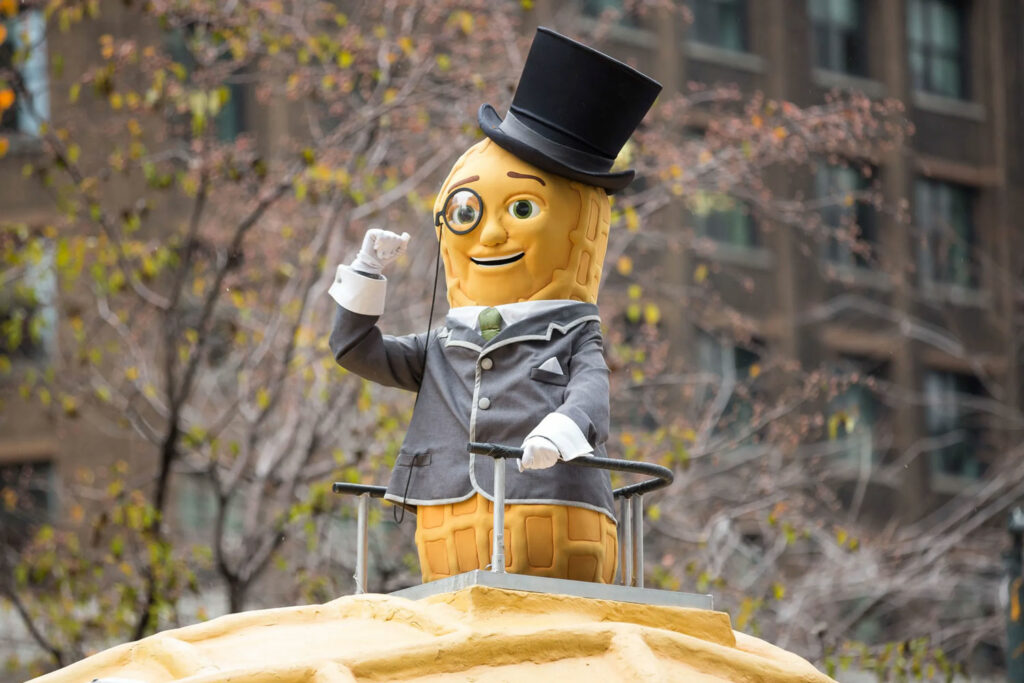
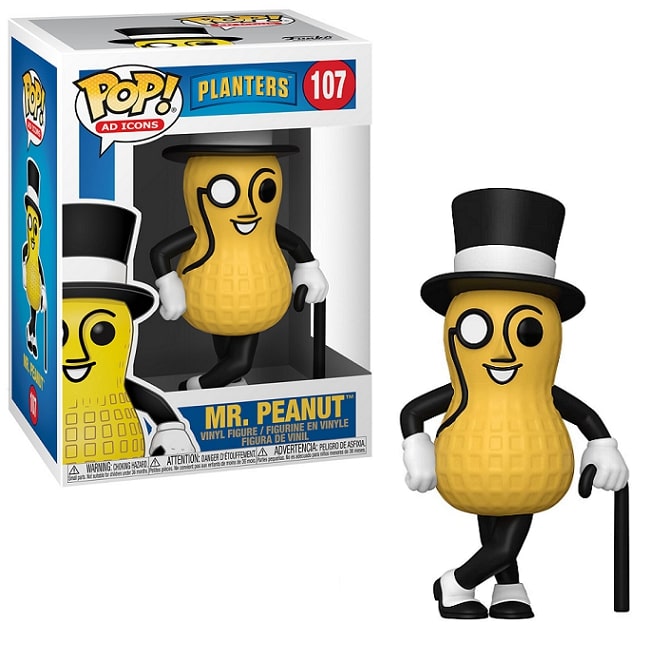
Pick up a jar of Planters peanuts and there he is. Top hat, monocle, cane. Looking like he has somewhere more important to be.
Mr. Peanut has been on that label since 1916. That’s not a typo. Over a hundred years with the same character, more or less, staring back at you from the snack aisle. In advertising years, that’s basically immortal.
So how did a peanut in a top hat last longer than most countries’ governments?
A kid drew him for five dollars
Planters was still a young company in 1916 when founders Amedeo Obici and Mario Peruzzi decided they needed a mascot. Instead of hiring a design firm, they ran a public contest. Anyone could submit.
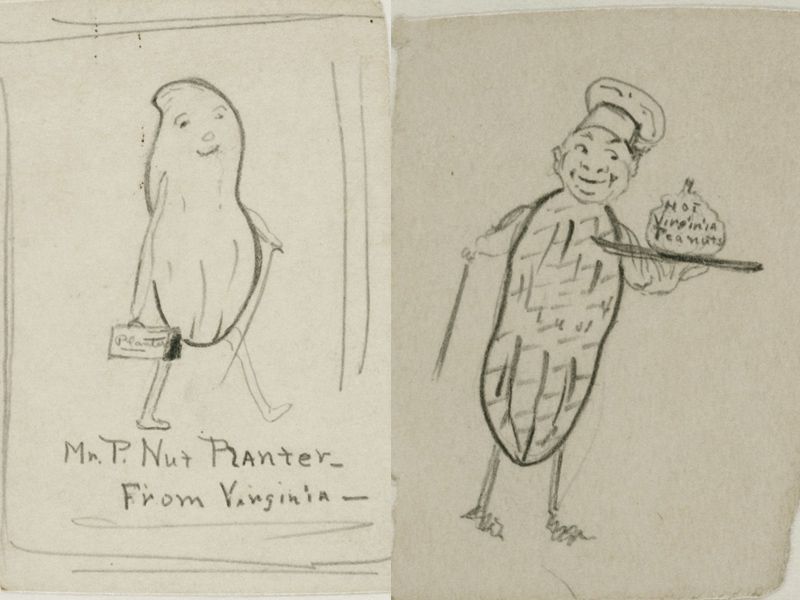
A 14-year-old named Antonio Gentile won it. His drawing was simple: a peanut with arms, legs, and a face. That was basically it.
The company paid him five dollars. About $140 in today’s money.
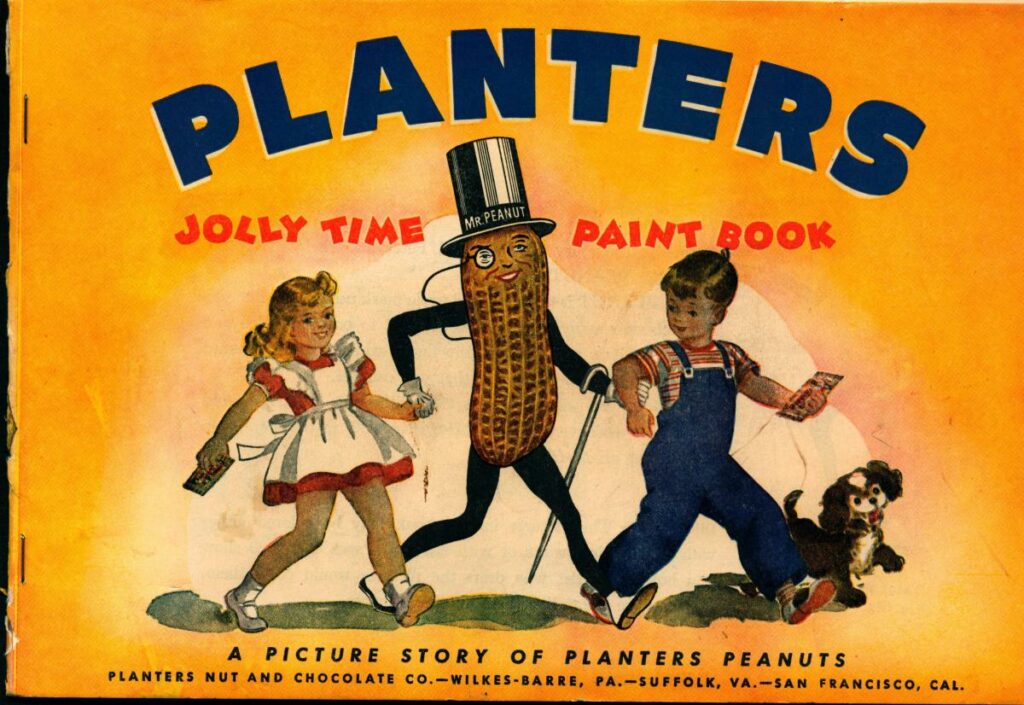
The monocle, top hat, and cane weren’t his idea. Professional illustrators added those later, and that’s the part that actually made the character work. Suddenly it wasn’t just a cartoon peanut. It was a cartoon peanut with taste, with personality, with an air of someone who took his snacking very seriously.
Planters wanted the brand to feel premium. A distinguished little gentleman on the packaging sent exactly that message without a single word of copy.
Planters wanted the brand to feel premium. A distinguished little gentleman on the packaging sent exactly that message without a single word of copy.
He showed up everywhere, and just never left
Through the 1920s and 30s, Mr. Peanut was all over newspaper ads, store displays, delivery trucks, product tins. Mascot advertising was a new and powerful thing, and he was one of the better examples of it.
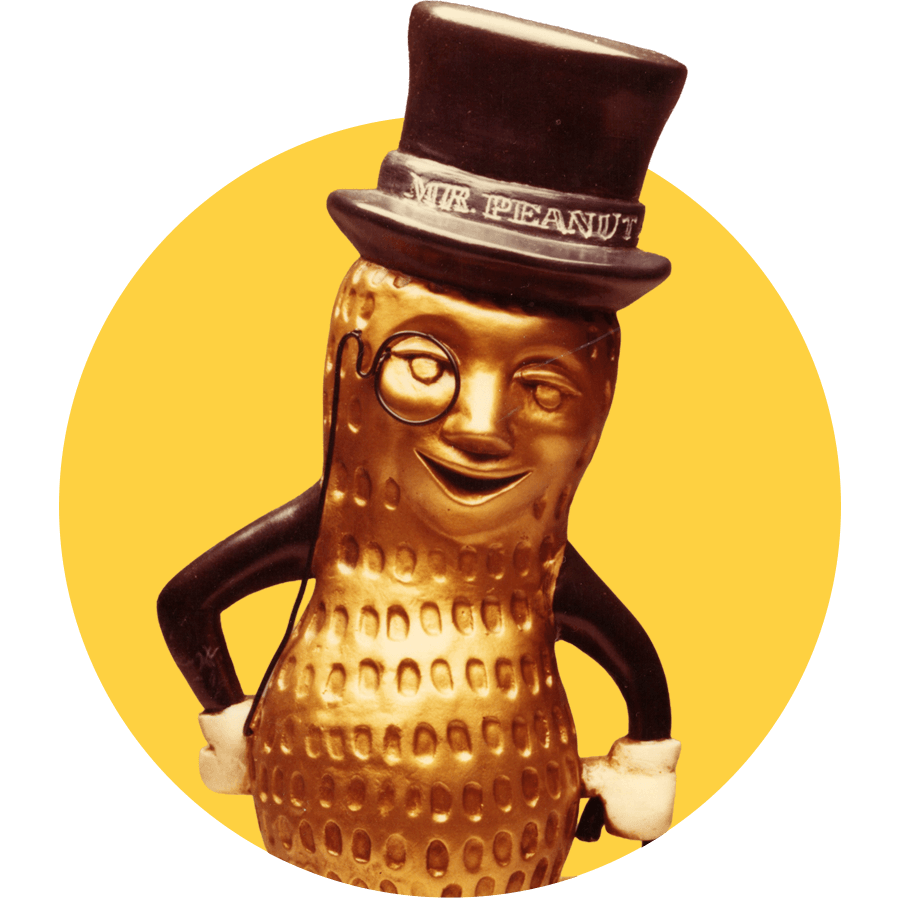
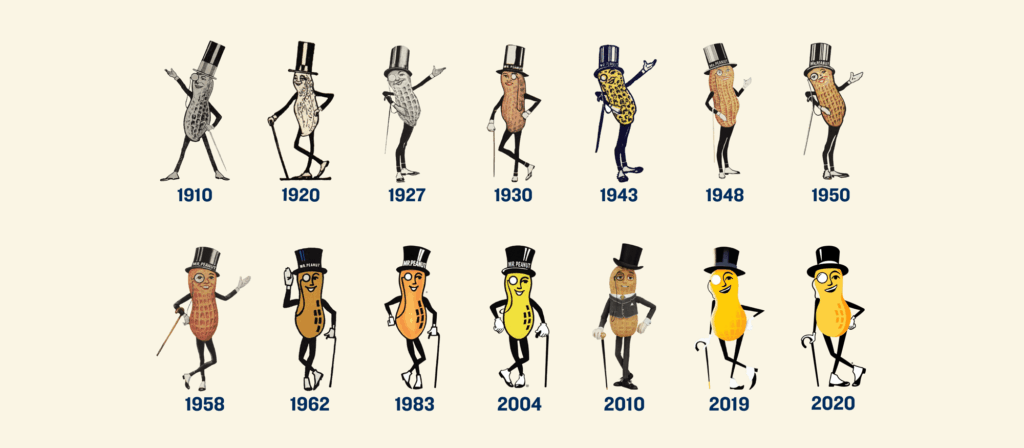
Then television arrived and he got a voice. Then the internet arrived and he got a Twitter account. Each era updated how he looked and where he showed up, but the core never really changed. Top hat. Monocle. Cane. Done.
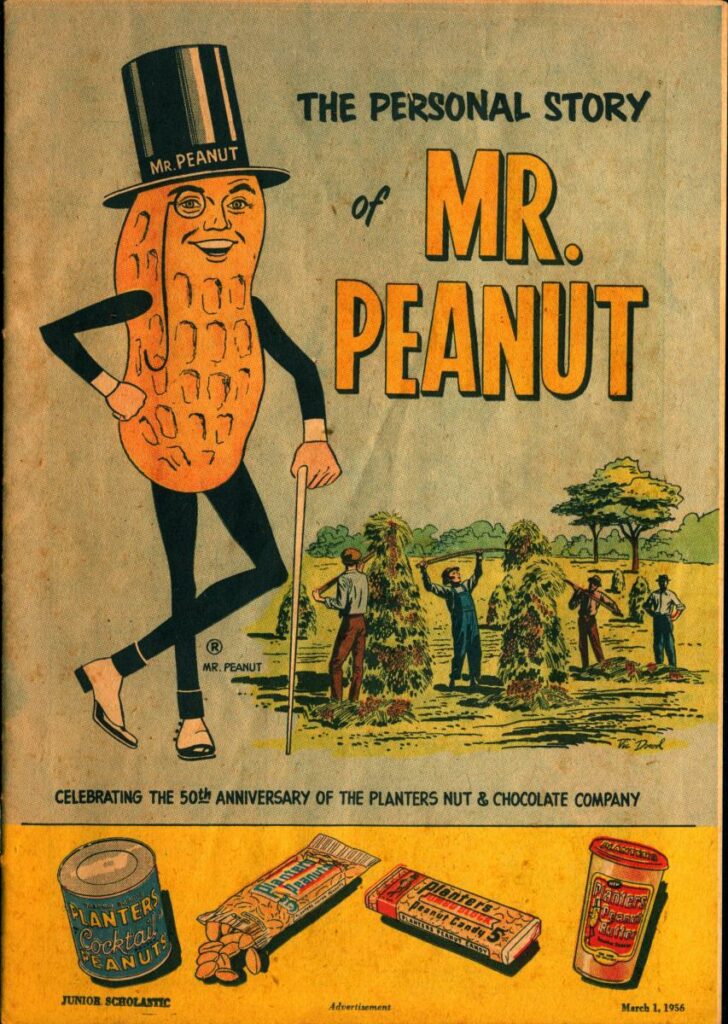
Most mascots don’t survive one era, let alone four or five. The ones that do usually share the same quality… they’re simple enough to adapt without losing what made them recognizable in the first place.
Mr. Peanut’s design is almost insultingly simple, which turns out to be exactly why it works. You can shrink him to the size of a thumbnail and still know who he is.
His full name, buried somewhere in Planters marketing history, is Bartholomew Richard Fitzgerald-Smythe. Make of that what you will.
Then they killed him
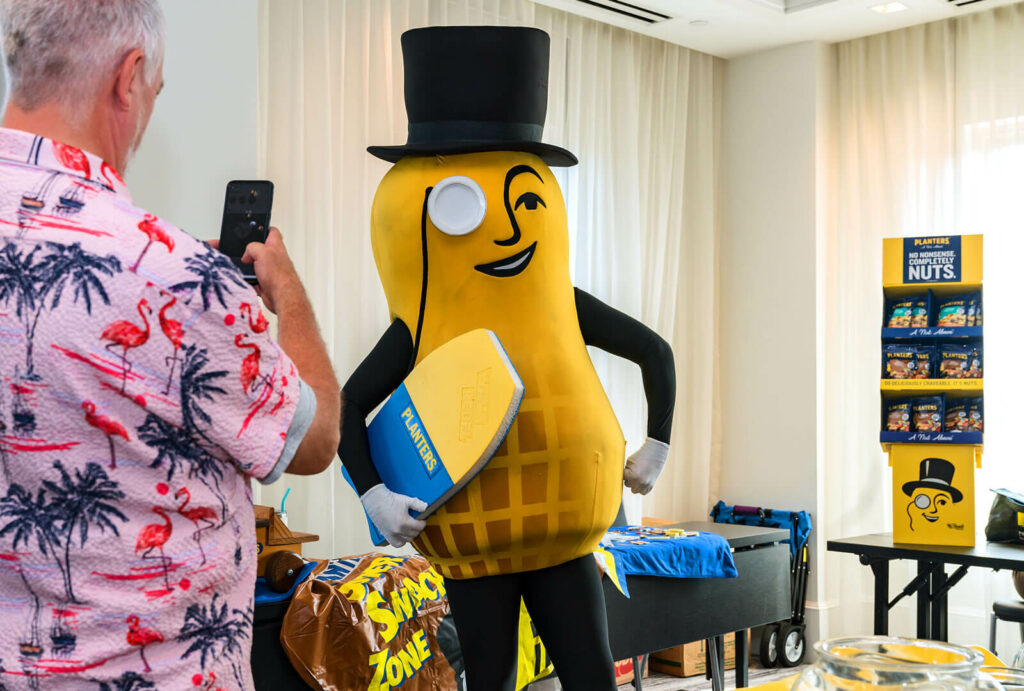
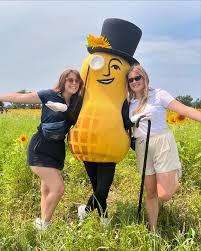
In January 2020, Planters announced that Mr. Peanut had died. Sacrificed himself to save his friends during a crash involving the Nutmobile — an actual peanut-shaped vehicle the brand drives around the country.
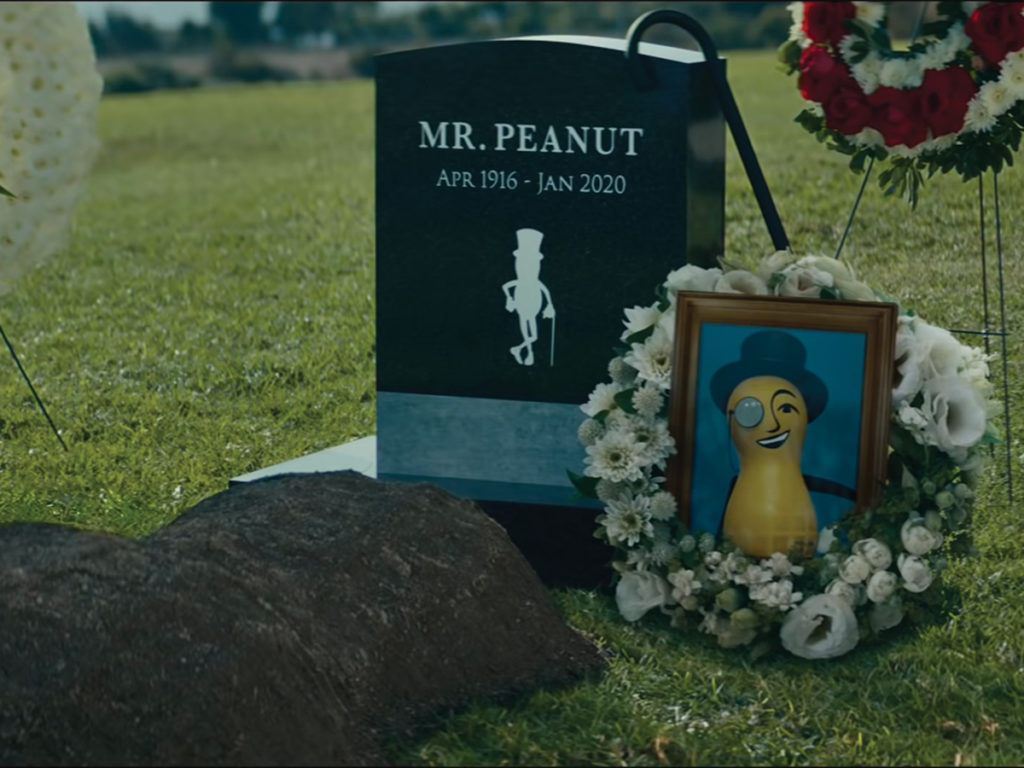
People held mock funerals online. News outlets covered it. Then during Super Bowl LIV, he came back as a baby.
Eventually grew up again into the original character.
It was a strange campaign. It was also everywhere for weeks, which was the whole point. The interesting part wasn’t the stunt itself… it was that people cared enough to react.
You can’t fake that kind of attachment. It had been building for a hundred years.
During the campaign, Mr. Peanut briefly returned as… “Baby Nut.”
The character later grew back into the classic Mr. Peanut form… Great stunt!
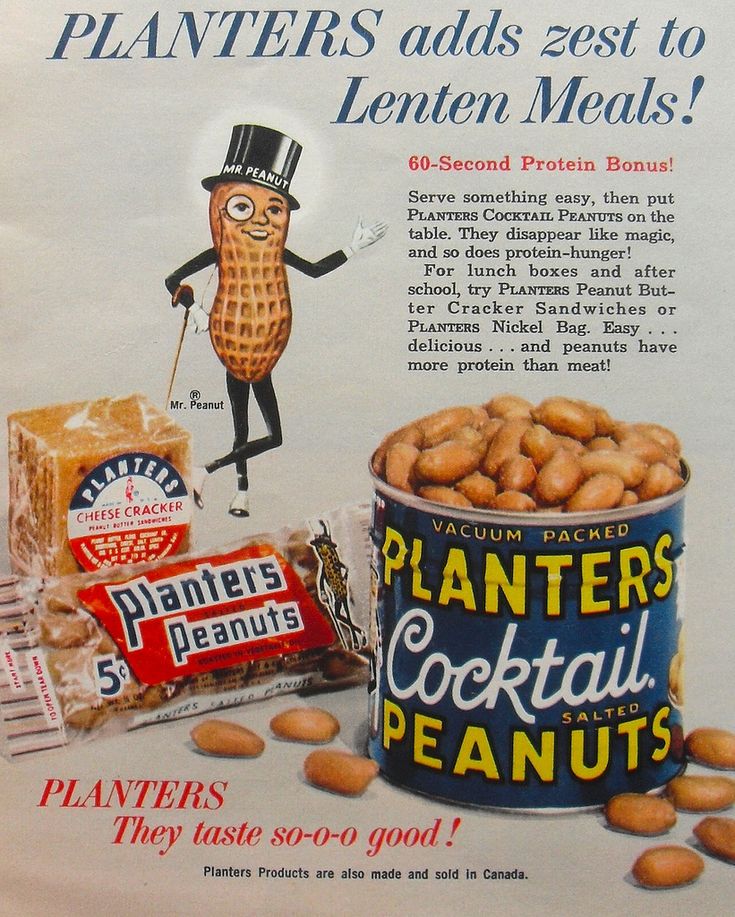
People collect this stuff seriously
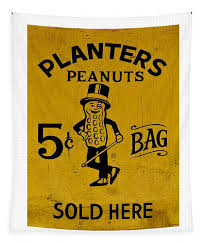
Vintage Planters tins, early advertising signs, ceramic figurines from the 1930s. There’s a real collector market around Mr. Peanut, and some of it fetches serious money.
Old advertising signs from the early decades have sold at auction for over $5,000.
Some antique Mr. Peanut advertising signs from the 1920s have sold for over $5,000 at auctions.
That doesn’t happen with mascots people feel neutral about. It happens when something becomes part of the texture of everyday life over long enough that it starts to feel like it belongs to everyone.
Why a hundred years
Simple design is part of it. So is the fact that Planters never walked away from him, even when rebranding might have seemed like the modern move.
Grandparents who grew up with him raised kids who grew up with him who are now raising kids with him on the shelf. That kind of continuity doesn’t have a shortcut.
The death campaign in 2020 accidentally proved the whole thing. You only kill off a mascot as a marketing stunt if you’re confident enough people will notice. Planters was right.
Antonio Gentile drew a smiling peanut in 1916 and took home five dollars. What got added after… the hat, the monocle, the cane, a century of appearances across every medium imaginable, turned that sketch into something that outlasted almost everything else from the same era.
He’s still on the jar. Still tipping his hat. Still looking like he has somewhere better to be. 🥜