The Laughing Cow: The Cheese Brand That Started as a War Joke
If you grew up in Europe or North Africa, chances are you’ve eaten these. Little foil-wrapped triangles, pulled from a round red box with a grinning cow on the lid. The kind of thing that showed up in lunch boxes and on picnic blankets for decades without anyone really stopping to ask… wait, why is the cow laughing? And why are her earrings tiny versions of the same box I’m currently holding?
Those are actually good questions. The answers are stranger than you’d expect.
It came from a truck
Léon Bel founded his French dairy company in the early 1900s with a pretty unglamorous idea: sell processed cheese in small portions that people could actually use without half of it going bad in the fridge.
Triangular wedges, individual foil wrap, packed into a round box. Practical. Convenient. Not exactly the stuff of legend.
He needed a face for it. Something people would remember.
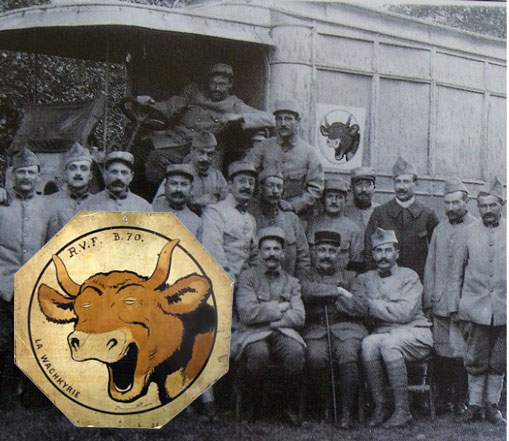
A Wartime Joke Becomes a Brand Symbol
What he found came from the war. During World War I, French soldiers had started drawing on their supply trucks nicknames, jokes, cartoons. One of those drawings was a laughing cow, a running gag aimed at German beef convoys, drawn by a French illustrator named Benjamin Rabier.
Rabier was known for one specific thing: drawing animals that looked like they had inner lives. His creatures didn’t just stand there. They had opinions.
The name “La Vache Qui Rit” literally translates from French to “The Cow Who Laughs.” The playful name was chosen because it sounded cheerful, and easy to remember.
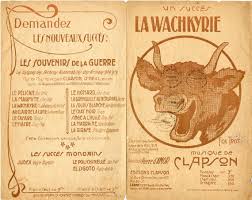
Designing the Famous Laughing Cow
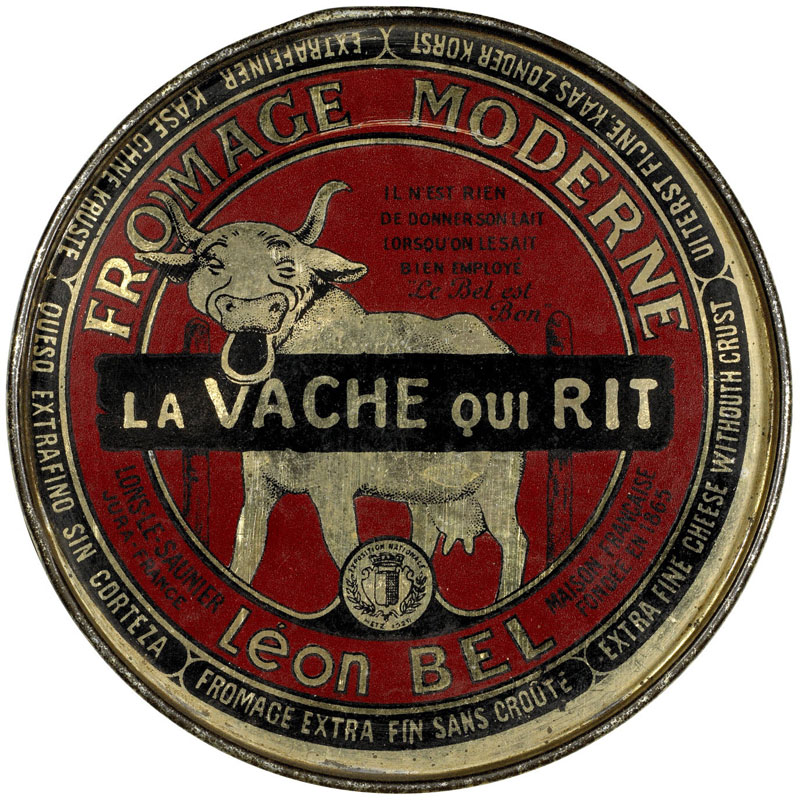
The laughing cow had stuck in people’s memories. After the war, Bel tracked Rabier down and asked him to turn it into a proper mascot. Rabier did. The brand launched in 1921. And somehow, over a hundred years later, she’s still there.
The result was a mascot that felt both fun and distinctive.
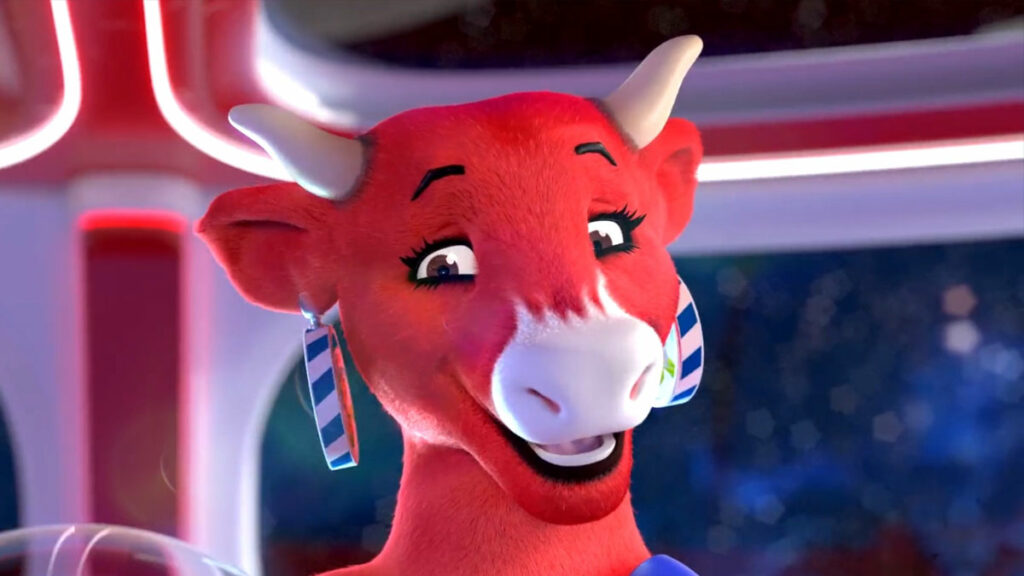
The earrings though
Most of Rabier’s design decisions were practical. Red, because everything else on dairy shelves at the time was beige and forgettable. Big smile, because that’s the whole point of calling something “the laughing cow.” Friendly eyes.
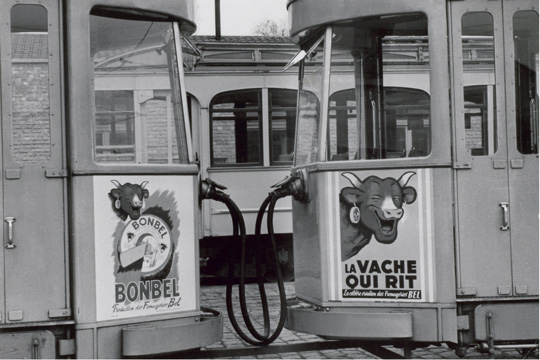
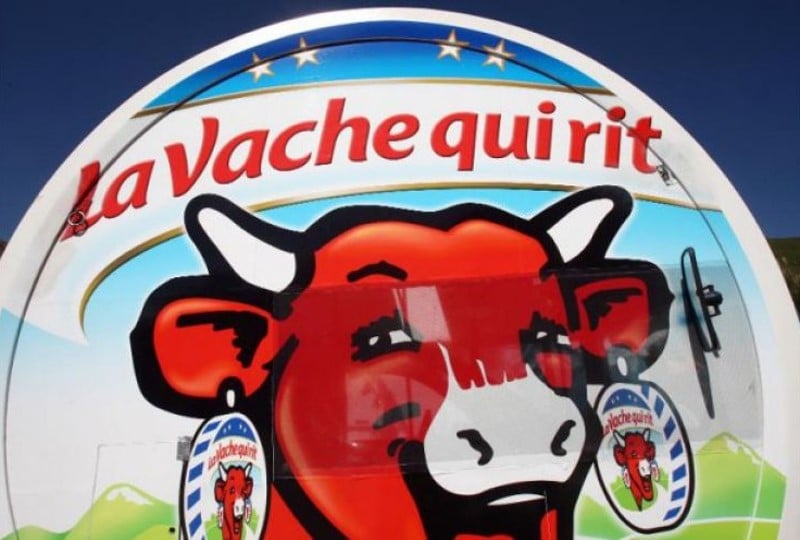
But then he added the earrings. Each one is a tiny round box of La Vache Qui Rit. And on that box, the cow is wearing earrings that are also tiny boxes, which also show a cow with earrings, which also show boxes, which go on forever.
This has a name: the Droste effect, after a Dutch cocoa brand that used the same trick on its packaging. An image containing itself, repeating into infinity. It’s a weird thing to put on a cheese box. Kids go quiet looking at it, trying to follow the loop. Adults who’ve bought the product fifty times suddenly notice it one day and spend a minute just staring.
That’s a lot of work for an earring. But it’s part of why the packaging stays interesting even after you’ve seen it a thousand times.
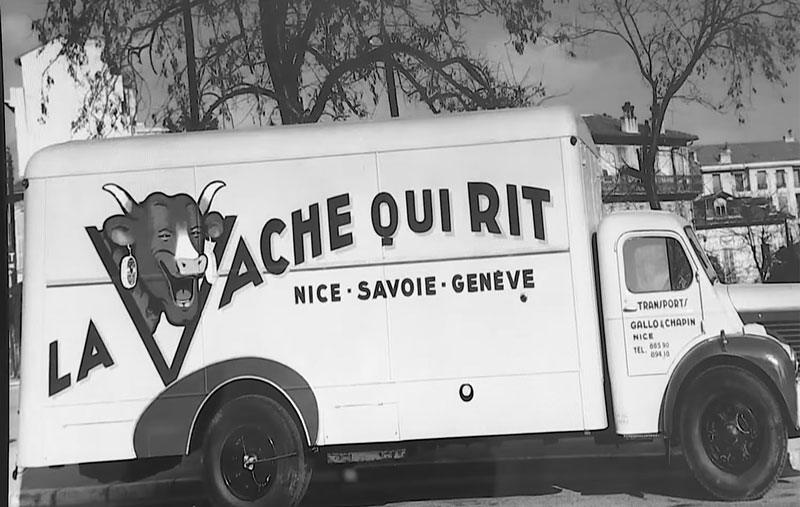
She hasn’t really changed
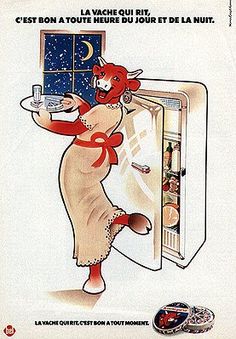
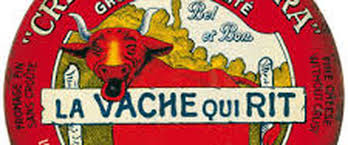
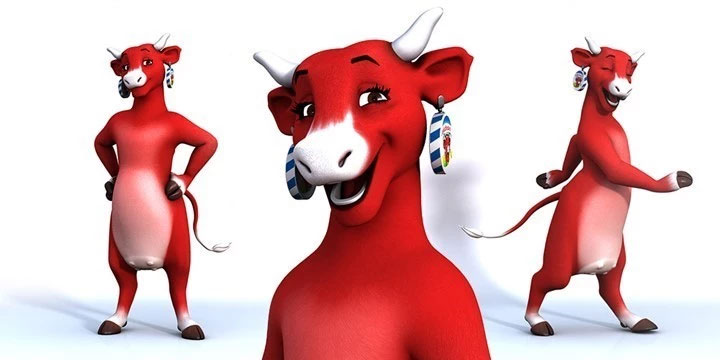
There have been updates over the decades, cleaner lines as printing got better, slight adjustments to the color and the expression. But hold a current box next to one from the 1970s and you’re not going to be confused about which is which. Same cow. Same smile. Same earrings containing the same infinite loop.
The Evolution of the Laughing Cow
Most brands eventually lose their nerve and redesign. They hire someone to make things feel more contemporary and end up with something that looks fine but doesn’t mean anything to anyone. Groupe Bel mostly resisted that. They tweaked without overhauling, which is genuinely hard to do when everyone around you is rebranding.
The name helps explain the international reach. La Vache Qui Rit (the cow who laughs) doesn’t need translating in any meaningful sense. The face does the work. A laughing expression reads the same way whether you’re in France or Egypt or the Philippines, which is partly why the brand ended up in over a hundred countries without losing anything in the process.
The Laughing Cow mascot is one of the oldest food mascots still used today, with a history that spans for more than a century.
So why has it lasted this long
Simple design, partly. The image works at any size, in any format. You can shrink it to a thumbnail and it’s still immediately readable. That’s not an accident, Rabier drew things that communicated fast, and fast communication is worth a lot when someone is walking past a shelf with somewhere to be.
But the honest answer is probably just the face. A laughing face doesn’t go out of style. It doesn’t feel dated after ten years or naïve after twenty. It just sits there being cheerful, which turns out to be exactly the right energy for something people buy to feed their kids on a Tuesday.
More than 10 million portions of Laughing Cow cheese are eaten every day around the world.
But the honest answer is probably just the face. A laughing face doesn’t go out of style. It doesn’t feel dated after ten years or naïve after twenty. It just sits there being cheerful, which turns out to be exactly the right energy for something people buy to feed their kids on a Tuesday.